Advanced Calculators Reshape Stake Allocation in Matched Arbitrage for Football and Tennis Markets
Written by Klara Günther · Jun 25, 2026
Advanced Calculators Reshape Stake Allocation in Matched Arbitrage for Football and Tennis Markets
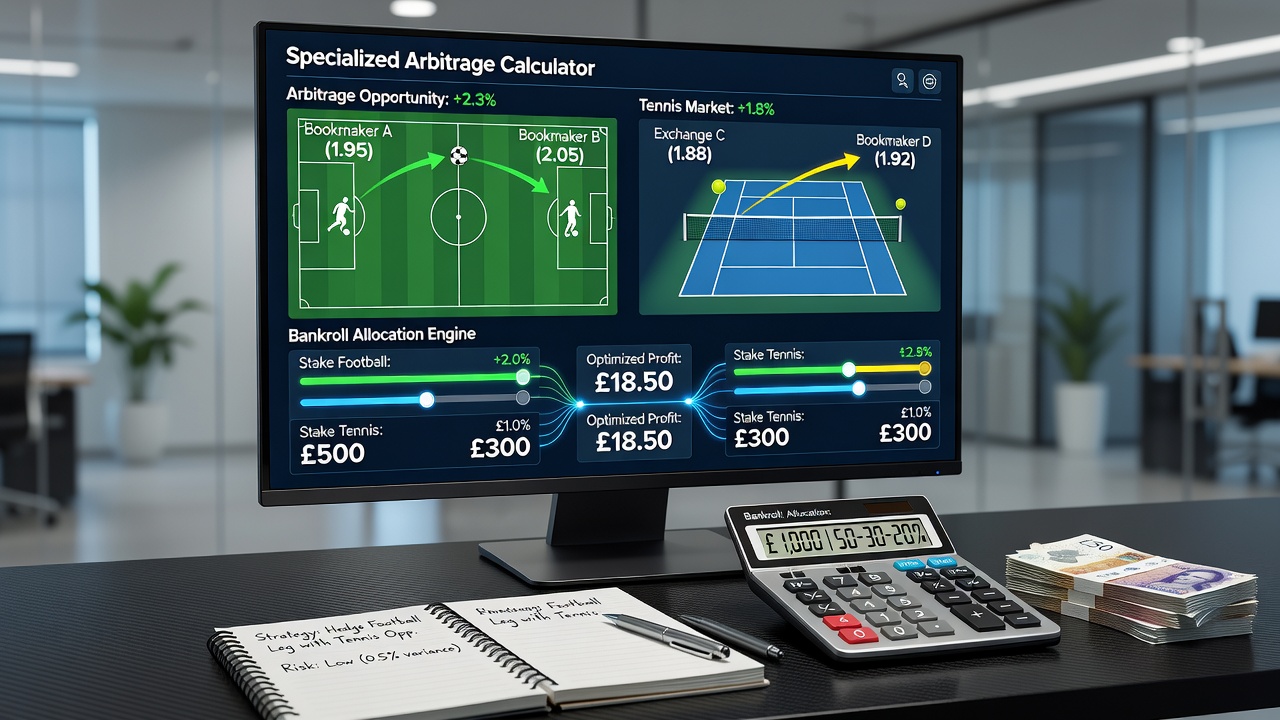
Specialized calculators have become central to how bettors manage stakes during matched arbitrage opportunities in football and tennis markets, where simultaneous positions on opposing outcomes lock in returns regardless of results. These tools process odds from multiple exchanges and books in real time, then output precise stake amounts that align with available bankroll while accounting for commission rates and potential deductions. Observers note that such software reduces manual errors that once led to uneven coverage across legs of an arbitrage trade.
Core Mechanics of Matched Arbitrage Calculators
Matched arbitrage relies on price discrepancies between platforms, and calculators handle the mathematics by inputting current odds, then generating stake splits that guarantee a fixed profit margin. The software factors in exchange commissions, which often range from 2 to 5 percent, and adjusts allocations accordingly so that the net return remains positive even after fees. Data from trading platforms shows that users who rely on these calculators complete trades faster than those working with spreadsheets alone, particularly during rapid odds movements in live football matches or tennis sets.
Operators of these tools integrate APIs from major betting exchanges, allowing automatic pulls of decimal or fractional odds without manual entry. Once odds load, the calculator applies formulas that solve for stake values on each side of the market while respecting user-defined bankroll limits. Researchers at institutions tracking online wagering patterns have documented that automated allocation cuts exposure to over-staking on one outcome, a common issue when bettors attempt mental math under time pressure.
Application in Football Markets
Football arbitrage often surfaces around match-winner lines, over-under totals, or Asian handicap markets where bookmakers and exchanges diverge in their assessments of team form or weather impacts. Calculators tailored for these scenarios accept inputs such as stake limits per bookmaker and exchange liquidity, then output amounts that keep total exposure within preset percentages of the overall bankroll. In June 2026, European exchange data indicated increased arbitrage activity during major international tournaments, with calculators helping traders scale positions across multiple fixtures without exceeding daily loss thresholds.
Users typically enter the total bankroll allocated for that session, after which the tool distributes stakes proportionally and displays projected profit in both absolute and percentage terms. This approach proves useful when liquidity varies between matches, since the software can flag when one side of the trade lacks sufficient volume to complete the full arbitrage. Those who monitor several football leagues simultaneously rely on batch processing features that handle multiple events at once while maintaining consistent risk parameters across all trades.
Tennis Market Adaptations and Volatility Handling
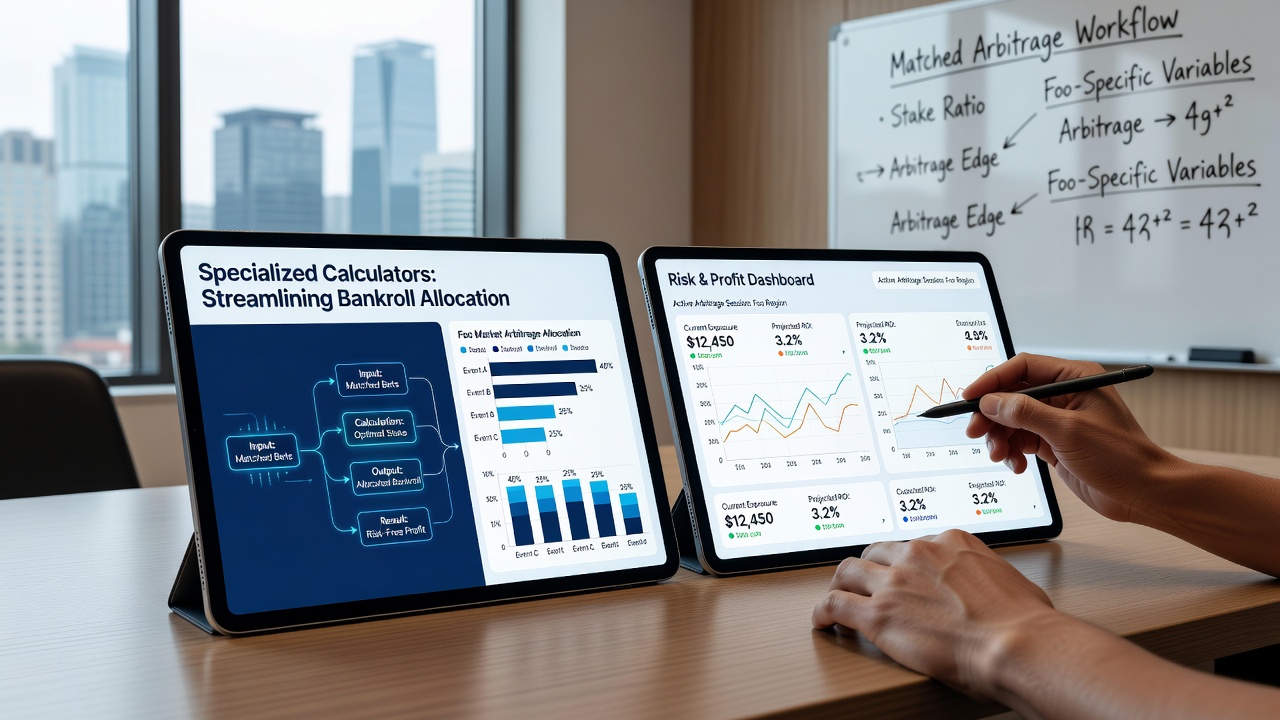
Tennis presents unique challenges because sets and games create frequent micro-markets where odds shift after every point. Specialized calculators accommodate this by allowing rapid updates to odds and remaining bankroll, recalculating stakes in seconds rather than minutes. The programs often include modules that account for player fatigue or surface-specific statistics, feeding those variables into allocation models so that stake sizes reflect both price and implied probability.
Industry reports from the European Gaming and Betting Association highlight how tennis traders use these tools to manage bankroll across multiple courts during tournaments, where simultaneous matches increase the chance of overlapping arbitrage windows. The calculators enforce rules such as maximum stake per market or minimum profit threshold, preventing small edges from consuming disproportionate portions of capital. When a line moves during a match, the software instantly shows revised stakes needed to restore balance, helping users decide whether the updated margin still justifies execution.
Bankroll Allocation Strategies Supported by Software
Effective allocation begins with segmenting total capital into risk tiers, and calculators enforce these divisions by capping exposure per trade or per day. Users set parameters such as maximum drawdown limits or target monthly returns, after which the program suggests stake sizes that align with those goals while exploiting current arbitrage spreads. A study published by researchers at the University of Sydney examined wagering patterns and found that systematic stake sizing through dedicated software correlated with steadier capital preservation over extended periods compared with ad-hoc methods.
Many calculators also incorporate scenario modeling that projects outcomes if one leg of the arbitrage fails to fill completely, displaying contingency stakes for partial execution. This feature helps traders in both football and tennis markets maintain overall portfolio balance even when exchange liquidity proves thinner than anticipated. Observers have noted that integration with bankroll tracking dashboards allows automatic logging of completed trades, which in turn feeds future allocation recommendations based on realized performance.
Conclusion
Specialized calculators streamline the process of dividing bankroll across matched arbitrage positions by automating complex calculations and enforcing consistent risk rules in football and tennis markets. As exchange liquidity and odds volatility continue to evolve, these tools provide structured methods for maintaining balanced exposure while capturing available edges. Data from multiple sources indicates growing adoption among traders seeking repeatable processes rather than manual adjustments during fast-moving events.