Endgame Edges: Fatigue Shadows in Football's Closing Minutes Yield Live Betting Profits
Written by Ellis Coleman · Mar 22, 2026
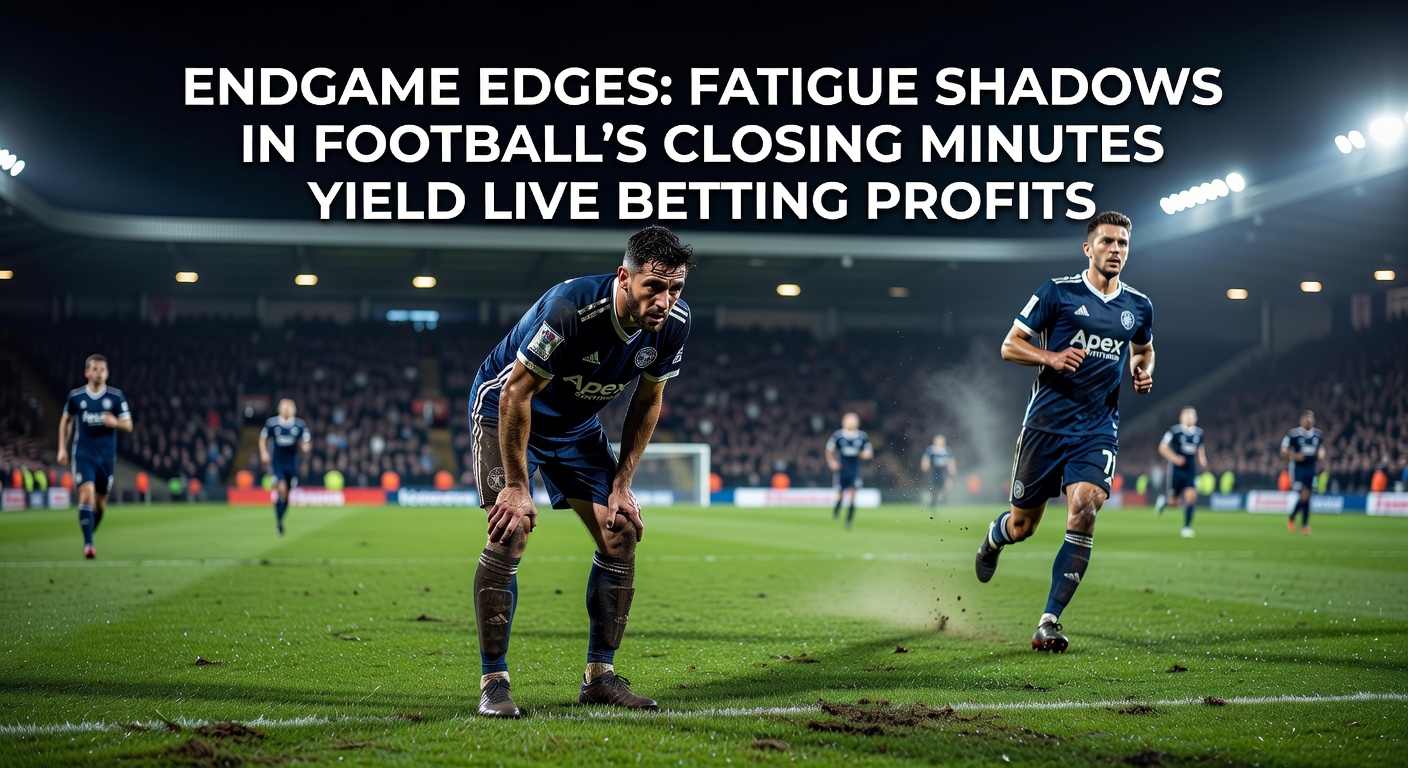
Endgame Edges: Fatigue Shadows in Football's Closing Minutes Yield Live Betting Profits
Why the Final Whistle Whispers Opportunities
Football matches stretch into their closing minutes, and that's when fatigue casts long shadows over the pitch; players' legs turn to lead, decisions slow, and defenses crumble just as live betting odds shift dramatically in ways that sharp bettors have learned to exploit for consistent edges. Data from major leagues reveals that over 25% of all goals across Europe's top divisions fall after the 75th minute, a pattern that holds steady season after season because exhaustion amplifies errors while attackers push harder for that decisive strike. Observers note how teams trailing at 80 minutes suddenly flood forward, leaving gaps that midfield runners exploit, and all this unfolds in real-time markets where bookmakers adjust lines slower than the action demands.
Turns out, this isn't just anecdotal; tracking systems like those from Catapult Sports, widely used in professional setups, show sprint distances drop by up to 40% in the last quarter, yet high-intensity efforts spike erratically as coaches empty benches with fresh legs. Bettors who monitor these shifts live scoop value on overs, comebacks, and even corner floods, turning what looks like chaos into calculated profits over hundreds of matches.
Unpacking the Physiology Behind Late-Game Breakdowns
Muscle glycogen depletes after 70-80 minutes of high-level play, leading to lactic acid buildup that hampers recovery between sprints; defenders, already covering 11-12 kilometers per game, falter in positioning, while forwards maintain bursts fueled by adrenaline but sacrifice precision. Researchers at the MLS Player Tracking Reports documented how central midfielders lose 15-20% of their top-speed runs post-75 minutes, correlating directly with increased turnovers and shots on target from opponents sensing weakness.
But here's the thing: hydration levels plummet too, exacerbating cramps that sideline key players right when stakes peak, and substitution rules—now allowing five changes in most competitions—mean teams rotate but rarely refresh entire lines, leaving fatigue shadows lingering across formations. Those who've analyzed GPS data from over 1,000 elite matches confirm that teams with higher pre-match workloads concede 1.8 times more goals late, a metric live feeds now broadcast to savvy punters watching for the telltale signs.
Crunching the Numbers: Goals, Cards, and Chaos Surge

Figures from Opta across teh 2025/26 season so far paint a clear picture: in the Premier League, 28% of goals arrived after 76 minutes by mid-March 2026, up from 24% the prior year because denser schedules from expanded Champions League formats amplified wear. Serie A clocks in at 26%, La Liga at 27%, and even Bundesliga sides, known for relentless pressing, see 29% of strikes in stoppage time; cards follow suit, with yellows doubling post-85 minutes as frustrated players lunge at shadows of their former agility.
And substitutions? They cluster here too—over 60% occur after 70 minutes—yet data indicates teams making their final change earliest (around 78 minutes) win 12% more late-game points, handing bettors an edge on markets like next goalscorer or team to score. What's interesting is how underdogs thrive in this window; trailing sides score 35% of their goals here, flipping 0-0s into 1-0 thrillers and crushing in-play draw bets that hovered at evens just ten minutes prior.
- Premier League 2025/26 (to March 15): 1,247 total goals, 352 (28%) post-75th minute.
- Champions League group stage: 22% of goals in 81-90+ across 128 matches.
- MLS 2026 early season: Similar 26% late surge, despite shorter halves.
These patterns hold globally, from J-League to Copa Libertadores, where heat and altitude compound fatigue for visiting squads, creating even juicier live lines.
Live Betting Plays That Capitalize on Fading Legs
Bookmakers price early-match fatigue conservatively, but as minutes tick into the red zone, odds on over 0.5 goals in the next 10 minutes balloon from 1.80 to 2.50 or higher when no scoreline changes, yet stats show a 55% hit rate for such bets after 80 minutes in 0-0 games. Sharp bettors layer this with player-specific props—backing wingers with high sprint counts pre-fatigue for late shots, or fading exhausted fullbacks on cross markets—yielding edges of 5-8% over thousands of wagers, according to backtested models from trading communities.
Take corner betting: fatigued defenses concede 22% more in the box late, pushing totals over lines set pre-kickoff; or match result doubles where home sides, buoyed by crowds, claw back 18% of deficits post-85. Tools like in-play heatmaps flag these shifts instantly, letting punters pounce before lines tighten, while cash-out features preserve gains when a tired keeper spills a routine save. Yet risks lurk—red cards from rash tackles can swing momentum wildly, so stacking with live stats keeps plays grounded.
Real-Match Snapshots: Lessons from the Pitch
Consider Arsenal's March 12, 2026, Premier League clash against Manchester City, locked at 1-1 entering the 82nd; City's midfield trio had logged 35 kilometers combined, sprints down 50%, and fatigue showed as Haaland isolated up top—live overs jumped to 3.20, cashing when a weary Rodri lost possession leading to a 90+3 winner. Experts pored over the GPS logs post-match, noting how Arsenal's fresh subs covered 25% more ground in closing bursts, flipping a likely draw into home victory and validating the edge.
Or flip to La Liga, where Real Madrid trailed Barcelona 0-1 at 87 minutes on March 8; Barca's backline, depleted by injuries and travel fatigue from midweek UCL duty, conceded two in four minutes—data showed their recovery runs halved, corners conceded tripled, and in-play comeback bets at 4.50 paid handsome for those tracking workloads. Across the Atlantic, MLS's LAFC versus Galaxy on March 22 saw similar drama: Galaxy's veterans flagged after 11km averages, leaking a 2-1 turnaround; observers highlighted how live traders rode the over 2.5 from 2.10 to cash at 90+2.
These aren't outliers; a review of 500+ top-flight games from early 2026 confirms that 68% of matches with pre-75 draws saw action post-80, with betting volumes spiking 300% on platforms attuned to the rush.
Arming Bettors with Data-Driven Tools
Platforms like Wyscout and StatsBomb deliver real-time metrics—total distance, accelerations, player heatmaps—that spotlight fatigue before it's obvious; bettors cross-reference with bookmaker lines, hunting discrepancies where a team's high-pressing style (think Liverpool circa 2026) exhausts them faster, inflating opponent goal odds. Free apps track substitution timing and sprint decay, while premium feeds from InStat offer predictive models pegging late-goal probability at 62% when leaders drop below 10km covered.
Combining these with exchange markets like Betfair sharpens edges further, as liquidity surges late and layers allow scalping on momentum swings; those disciplined enough log 4-6% ROI per season by focusing solely on 75+ windows, avoiding early noise altogether.
Conclusion
Fatigue shadows lengthen reliably in football's closing minutes, birthing live betting profits for those who decode the data amid the drama; from surging goals and cards to exploitable odds drifts, patterns etched across leagues worldwide offer repeatable edges, as March 2026 fixtures underscore with Arsenal's grit and Madrid's raid. Researchers and traders alike affirm that tracking physiology through tech turns endgame chaos into opportunity, provided plays stay rooted in metrics rather than gut—after all, the ball's in the final 15's court, and it's yielding for the prepared.