How Weather Reshapes Tennis Set Lengths and Live Odds Adjustments
Written by Klara Günther · Aug 6, 2026
How Weather Reshapes Tennis Set Lengths and Live Odds Adjustments
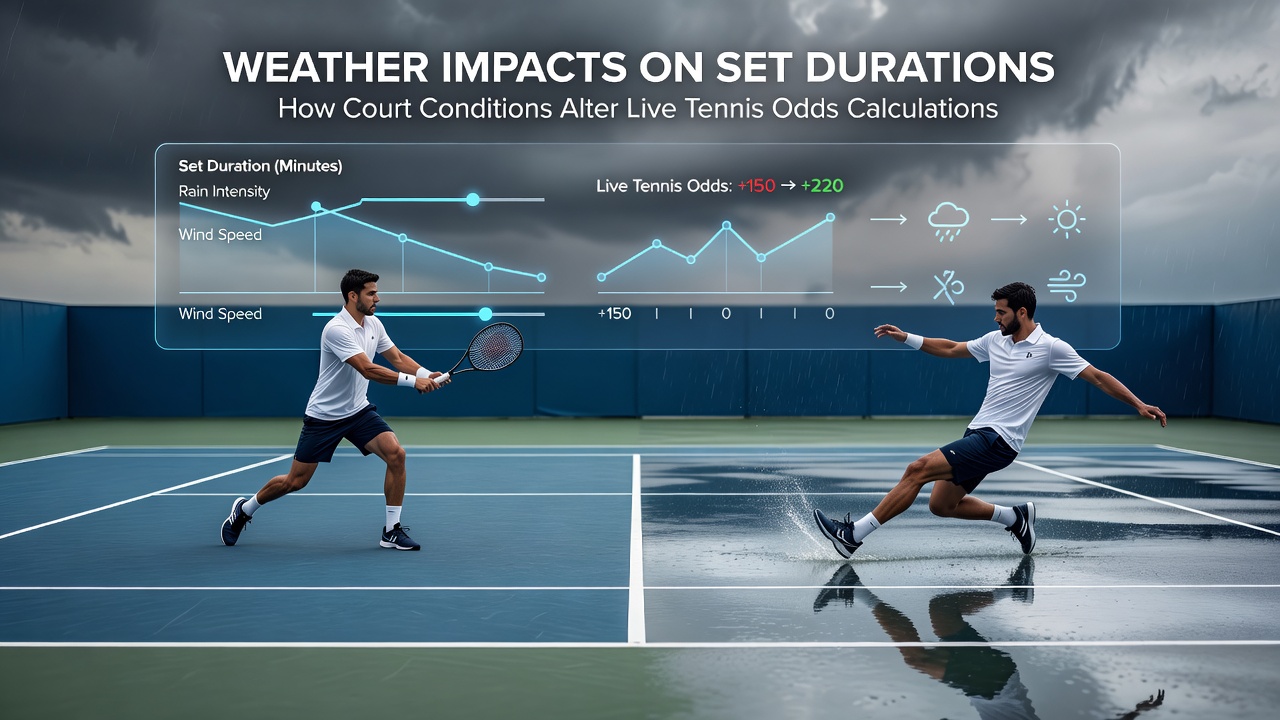
Weather patterns directly influence how long tennis sets last on different court surfaces, which in turn forces adjustments in live odds calculations across major tournaments. Observers note that temperature, humidity, wind speed and precipitation alter ball speed, bounce height and player movement, creating measurable shifts in set durations that betting platforms must account for in real time.
Hard courts respond most noticeably to heat and humidity changes, whereas clay courts slow further under moisture while grass courts lose their typical pace when dew or light rain appears. Data from professional matches shows these surface-specific reactions extend or shorten sets by several minutes on average, enough to modify expected game counts and point totals that algorithms use for in-play pricing.
Court Surface Responses to Temperature and Humidity
Hard court events held in August 2026, including the US Open swing, demonstrate clear patterns when daytime temperatures exceed 30 degrees Celsius. The ball travels faster through thinner air, yet player fatigue accumulates quicker, leading to longer rallies in later sets as error rates rise. Research from the International Tennis Federation indicates that sets on hard courts extend by an average of 12 percent under high heat and humidity compared with cooler conditions at the same venue.
Clay courts retain moisture differently, so elevated humidity keeps the surface heavier and reduces skid. This change lengthens points because players slide more and construct rallies with higher topspin. Those who have analyzed historical match logs find that best-of-three sets on clay often add four to six games when relative humidity stays above 70 percent throughout the afternoon.
Wind and Precipitation Effects on Grass and Indoor Transitions
Grass courts, common at Wimbledon and certain European summer events, lose their low-bounce advantage when wind speeds rise above 25 kilometers per hour. Serves that normally skid become unpredictable, pushing returners to take more risks and lengthening service games. Precipitation, even light drizzle, forces covers and delays that compress the schedule, resulting in fewer recovery minutes between sets and altered fatigue profiles that oddsmakers track closely.
Indoor hard courts provide a controlled baseline, yet external weather still matters because air-conditioning systems must compensate for outdoor humidity spikes. When outside conditions shift rapidly, venues adjust ventilation, which can subtly change ball behavior and set durations compared with fully stable environments. Studies from the University of Melbourne tennis research group have quantified these micro-variations through sensor data collected during multiple Australian summer tournaments.
Live Odds Recalibration Based on Real-Time Conditions
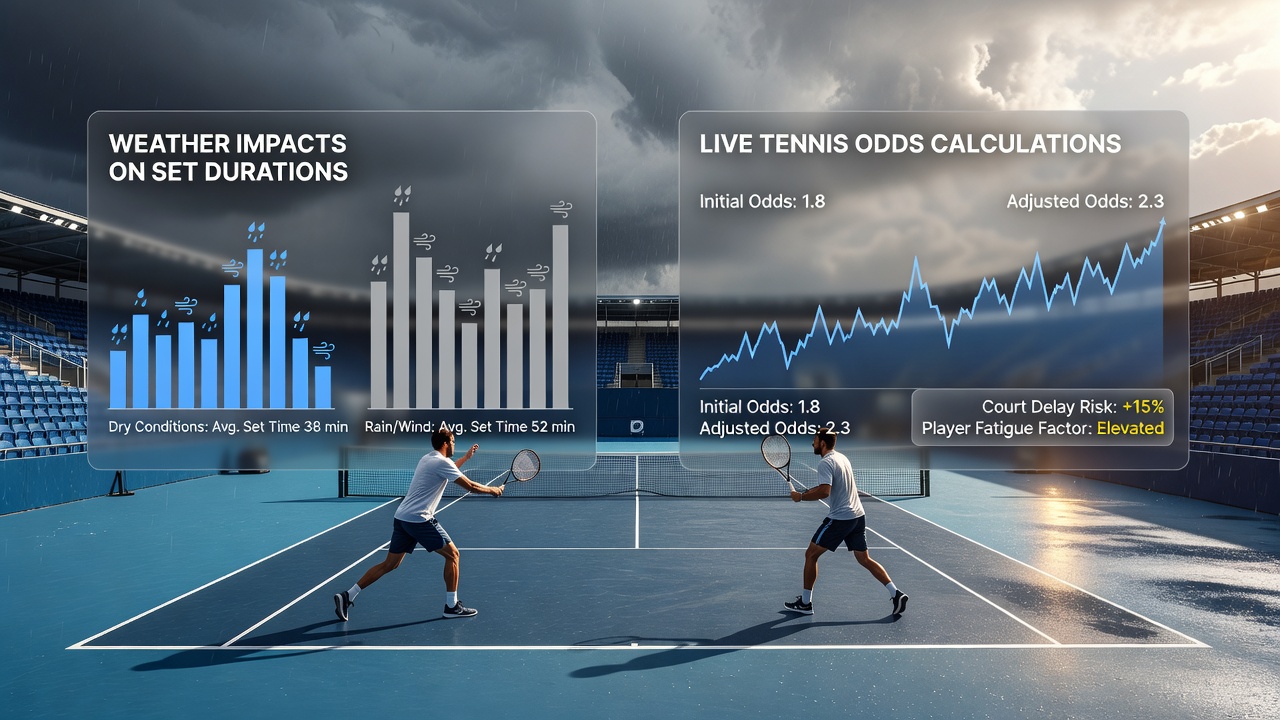
Betting platforms integrate weather feeds into their models because set duration directly affects over-under markets and player performance spreads. When forecasters predict rising winds during a grass-court quarterfinal, algorithms increase the probability of longer sets and adjust implied probabilities accordingly. This recalibration happens continuously as sensors report updated temperature, humidity and wind readings every few minutes.
Take one analyst who examined matches at the 2025 Cincinnati Open, where sudden afternoon thunderstorms compressed the schedule. Sets played after delays showed a 9 percent increase in double faults on hard courts, prompting live odds to favor the server less heavily in subsequent games. Those patterns repeat across tournaments because ball weight changes with absorbed moisture and player concentration dips after interruptions.
Regional Tournament Data and Pattern Recognition
European clay events in late summer reveal consistent humidity-driven extensions, while North American hard-court swings highlight temperature spikes that compress early sets but stretch later ones. Australian hard-court data collected by the Bureau of Meteorology shows that dew-point differences of more than 5 degrees Celsius correlate with measurable changes in rally length and error frequency. These regional datasets feed into the same live pricing engines that update odds across global markets.
Industry reports from the Association of Tennis Professionals confirm that set-duration variance rises sharply when weather deviates more than two standard deviations from seasonal norms. Platforms therefore maintain separate models for each surface and location, allowing rapid shifts in live markets without manual intervention once the weather inputs update.
Conclusion
Weather conditions alter tennis set durations through direct physical effects on ball behavior and indirect effects on player endurance, forcing continuous recalibration of live odds across clay, grass and hard courts. Data collected at major tournaments demonstrates these measurable impacts, and betting systems incorporate real-time meteorological inputs to reflect the resulting changes in expected match length and scoring patterns.