Integrating Forecast Models with Dynamic Stake Distribution in Overlapping Event Markets
Written by Ellis Coleman · Jun 27, 2026

Integrating Forecast Models with Dynamic Stake Distribution in Overlapping Event Markets
Researchers at several European institutions have examined how predictive synthesis methods combine outputs from multiple algorithms to generate unified forecasts, while allocation protocols determine how resources spread across events that unfold at the same time. Data from industry reports indicate that operators handling parallel contests often apply these combined approaches to adjust positions in real time as new information arrives. Studies published through 2025 show that synthesis layers aggregate probability estimates from statistical models, machine learning outputs, and historical pattern analysis before feeding results into allocation engines.
Predictive Synthesis Methods in Practice
Academic teams in Australia and Canada documented synthesis frameworks that merge separate prediction streams into single consensus figures for each contest outcome. One project tracked tennis and football matches running concurrently and found that weighted averaging across models reduced variance in projected margins compared with single-source estimates. Observers note that synthesis steps typically include calibration checks against recent results, followed by adjustments for venue, weather, or squad changes that affect multiple events at once. Figures from a 2025 analysis of North American sportsbooks reveal that platforms using layered synthesis recorded higher accuracy rates on spread outcomes when three or more independent models contributed inputs.
Allocation Protocols Across Concurrent Events
Allocation protocols translate synthesized forecasts into position sizes by applying rules that account for available capital, risk limits, and correlation between simultaneous contests. European regulators outside the UK reported in mid-2025 that licensed operators must maintain documented procedures for distributing exposure when several markets move together. These protocols often incorporate correlation matrices so that bets on related contests do not exceed predetermined concentration thresholds. Data collected by Canadian provincial authorities through early 2026 indicated that firms employing automated allocation reduced instances of overexposure during high-volume weekends featuring overlapping leagues.
Connecting Synthesis Outputs to Allocation Decisions
Integration occurs when synthesis engines pass calibrated probabilities and confidence intervals directly into allocation modules that calculate stake amounts. Research teams at universities in the United States have tested interfaces where updated synthesis results trigger immediate recalculation of position sizes across active events. In one documented case, an operator adjusted stakes on three concurrent basketball games after synthesis flagged a shift in injury-related probabilities, keeping total exposure within policy limits. Protocols frequently use linear programming or similar optimization techniques to solve for stake vectors that maximize expected value while respecting constraints on total capital deployed at any moment.
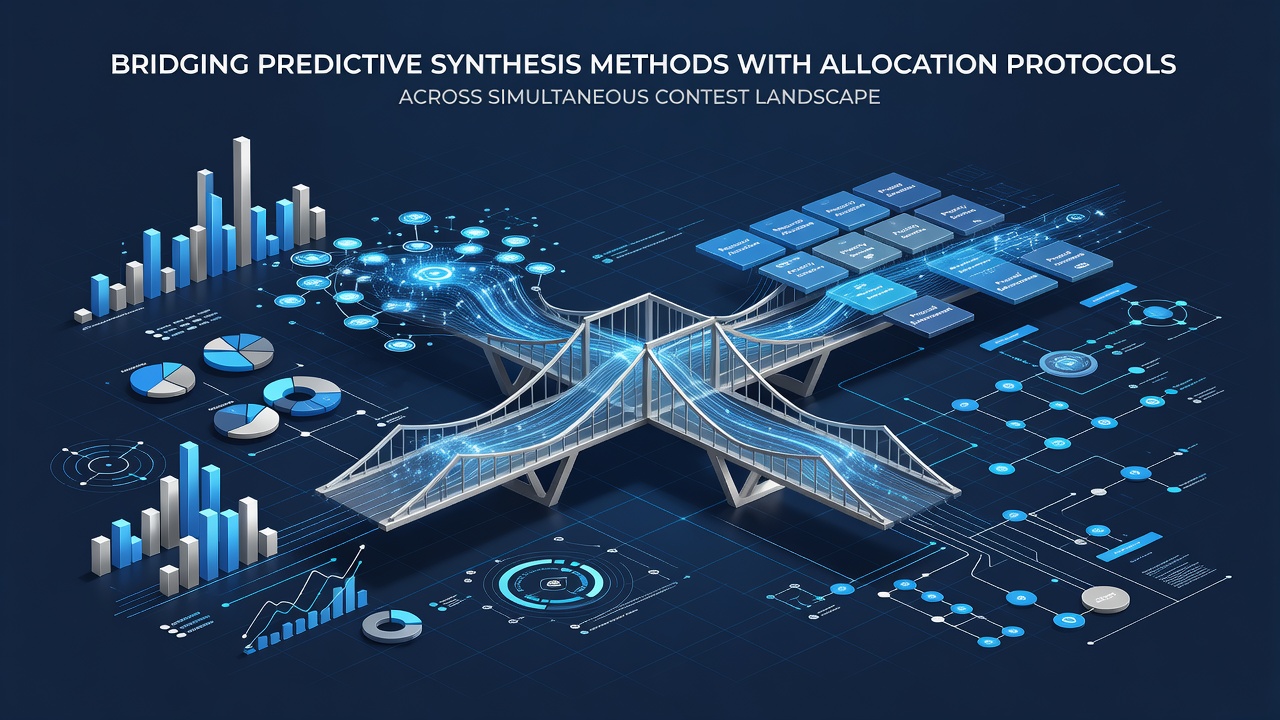
What's interesting is how correlation adjustments within allocation layers prevent excessive clustering when contests share common factors such as player fatigue or weather conditions. A 2026 working paper from an Australian research group described a system that lowered aggregate variance by 12 percent after synthesis outputs included explicit covariance terms between events. Operators in several jurisdictions now embed these terms so that allocation engines avoid concentrating capital on positively correlated outcomes that could move in the same direction during simultaneous play.
Implementation Patterns Observed in 2026
By June 2026, several platforms had adopted modular architectures allowing synthesis and allocation components to update independently as new data streams arrive. Reports from gaming associations in the European Union highlight that real-time feeds from officiating bodies feed directly into synthesis layers, which then push revised figures to allocation engines every few minutes. One study of volleyball and basketball events running on the same evening showed that protocols automatically scaled down stakes on correlated underdog positions once synthesis detected rising momentum in one contest that could influence the other. These adjustments happened without manual intervention once thresholds were crossed.
Industry observers have recorded that firms maintaining separate audit logs for synthesis and allocation steps meet compliance requirements more consistently across different regulatory regions. Data released by Australian state authorities in the first half of 2026 indicated that operators using integrated pipelines completed required reporting cycles faster than those relying on disconnected spreadsheets. The same datasets showed fewer instances of stake misallocation during periods of high market volatility when automated bridges between the two systems were active.
Conclusion
Current evidence demonstrates that organizations linking predictive synthesis methods with allocation protocols achieve more consistent position management when contests occur simultaneously. Academic and regulatory sources from multiple continents continue to track performance metrics as these integrated systems expand. Continued refinement of interfaces between forecast generation and capital distribution remains a focus for both researchers and operators through the remainder of 2026 and beyond.