Optimizing Resource Distribution in Multi-Market Betting Through Algorithmic Allocation Systems
Written by Otto Wagner · Aug 11, 2026

Optimizing Resource Distribution in Multi-Market Betting Through Algorithmic Allocation Systems
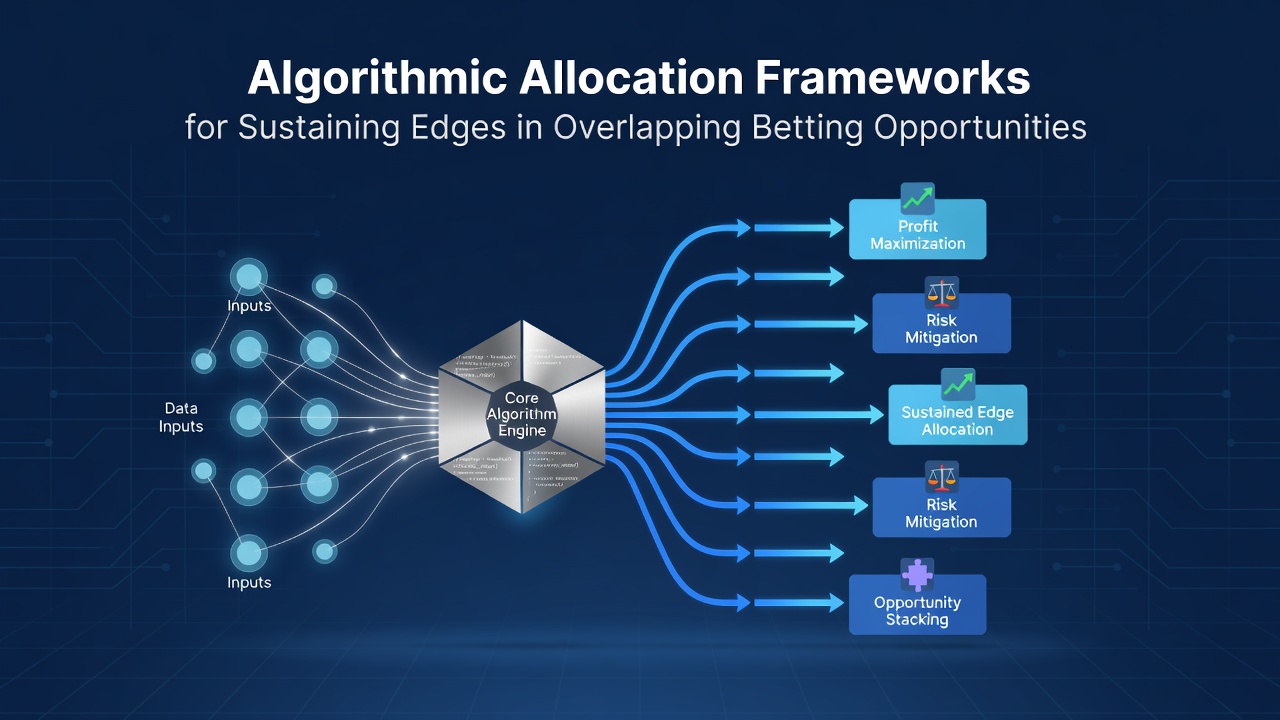
Algorithmic allocation frameworks address the challenge of distributing stakes across concurrent betting opportunities that share underlying events or outcomes, and these systems draw on optimization techniques to maintain positive expected value over extended periods. Observers note that such frameworks integrate real-time data feeds with mathematical models, allowing adjustments when markets overlap in timing or statistical dependencies.
Those who study betting dynamics point out that overlapping opportunities arise frequently in live sports markets, where a single match might generate correlated wagers on totals, spreads, and player props simultaneously. Researchers have documented cases where independent edge calculations lead to overexposure on shared risk factors, prompting the need for coordinated allocation logic instead.
Core Elements of Allocation Models
Allocation models typically begin with edge estimation for each opportunity, followed by correlation analysis that identifies shared variance across selections. Data from multiple exchanges and bookmakers feed into these calculations, and frameworks then apply constrained optimization routines to determine stake sizes that respect overall bankroll limits while targeting maximum growth under volatility constraints.
Studies indicate that basic implementations rely on variants of the Kelly criterion adjusted for portfolio effects, whereas advanced versions incorporate machine learning components to refine correlation estimates as new information arrives. Experts have observed that these systems process thousands of variables per second during peak betting windows, updating allocations dynamically rather than relying on static pre-match decisions.
Handling Dependencies in Practice
When two or more bets share common outcomes, simple additive staking increases drawdown risk substantially. Frameworks counter this by solving quadratic programming problems that minimize portfolio variance subject to expected return targets, and practitioners report measurable reductions in maximum drawdowns after deployment. One documented implementation in European football markets during the 2025 season adjusted stakes across live over/under and Asian handicap lines within the same fixture, achieving steadier equity curves than isolated Kelly applications.
August 2026 brought expanded access to granular event data from several major leagues, which in turn allowed allocation engines to incorporate micro-level statistics such as expected goal increments and possession-adjusted scoring rates. Figures from industry monitoring services show that operators integrating these feeds recorded improved calibration between modeled edges and realized returns over the following months.
Integration With External Data Sources
Allocation accuracy improves when frameworks ingest official statistics from bodies such as the NCAA research division alongside proprietary tracking data. These inputs help quantify conditional probabilities that affect multiple markets at once, reducing the incidence of simultaneous losses from correlated mispricings.
Another useful reference comes from academic work published through SSRN research papers on multi-asset betting, which demonstrates how covariance matrices derived from historical results can be updated incrementally without full recomputation. Operators who adopted similar incremental approaches noted faster response times during high-volume periods such as grand slam tennis tournaments or multi-stage cycling events.
Operational Considerations and Scaling
Deployment requires robust infrastructure capable of handling latency below 200 milliseconds for live adjustments, and teams often maintain separate testing environments to validate new correlation parameters before live rollout. Reports from platform developers highlight that edge decay accelerates when allocation logic fails to account for liquidity constraints across different bookmakers, leading some frameworks to include position-size caps derived from available market depth.
Those monitoring the sector note continued refinement in 2026 as regulatory changes in several jurisdictions altered data-sharing rules, forcing algorithms to rely more heavily on synthetic data generation for less transparent markets. This shift prompted increased use of ensemble methods that blend outputs from multiple statistical families, thereby preserving allocation stability even when certain inputs become temporarily unavailable.
Conclusion
Algorithmic allocation frameworks provide structured methods for managing stake distribution across overlapping betting opportunities, and continued advances in data availability together with computational techniques support their ongoing evolution. Observers expect further integration of real-time statistical feeds and adaptive optimization routines as market complexity grows, with performance metrics remaining the primary measure of effectiveness across different sporting domains.