Referee Assignment Histories Predict Penalty Trends in League Markets
Written by Riley Hughes · Oct 2, 2026
Referee Assignment Histories Predict Penalty Trends in League Markets
Referee assignment histories provide measurable data points that analysts track when modeling penalty frequency in domestic football leagues, and these records reveal consistent patterns across multiple seasons. Teams and market participants examine past decisions because certain officials award penalties at rates that differ from league averages by measurable margins, while assignment schedules determine which referees handle specific fixtures.
Patterns in Referee Tendencies Across Seasons
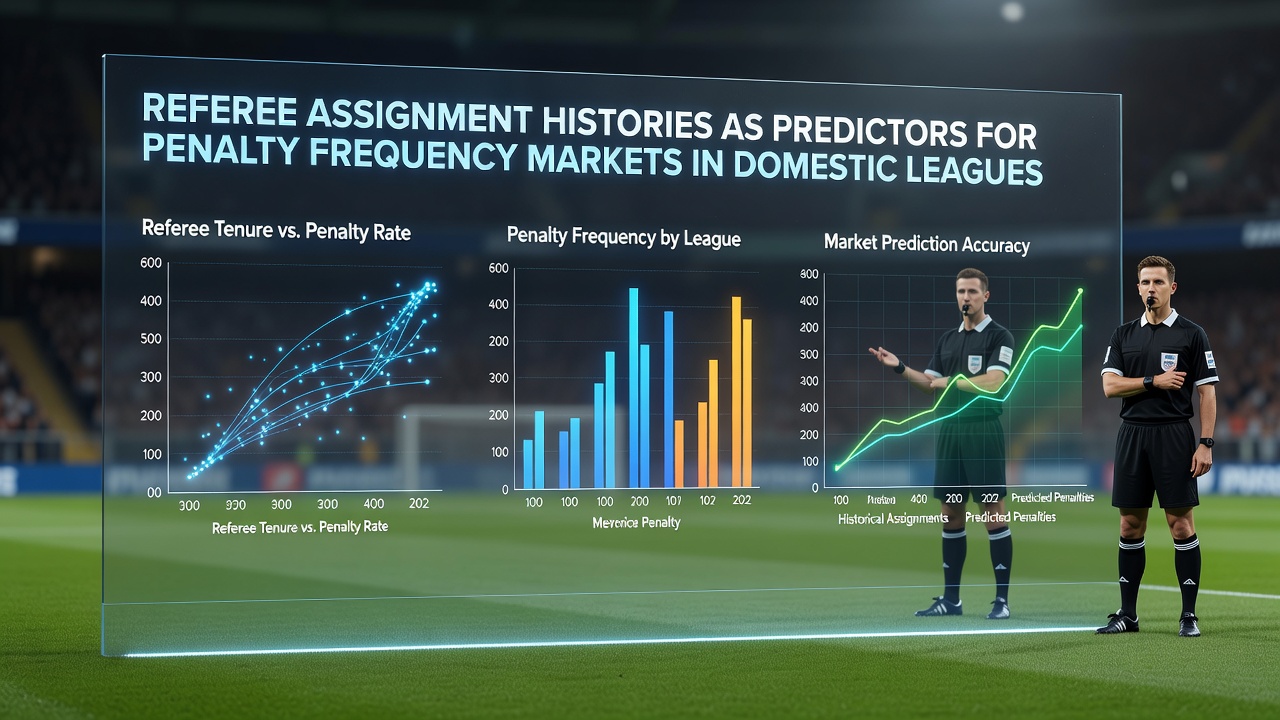
Data compiled from European domestic competitions shows that referees maintain individual penalty award rates that remain stable year over year, with some officials consistently exceeding the league mean by 15 to 25 percent while others fall below it. These tendencies emerge from detailed match logs that record every decision, and researchers cross-reference them against variables such as match location, team styles, and time of season. Observers note that assignment histories allow models to project expected penalty counts once the referee for an upcoming fixture becomes known, because the official's prior workload and decision distribution supply quantifiable inputs.
Studies from sports analytics programs at institutions like the University of Sydney have examined how referee rotation systems affect these projections, and the findings indicate that leagues with transparent assignment processes produce more reliable historical datasets. In October 2026, several top European leagues continue to publish referee appointments weeks in advance, which gives analysts additional time to incorporate the latest performance metrics into their calculations.
Integration With Penalty Frequency Markets
Betting markets that focus on total penalties awarded per match or per team draw directly from these historical profiles because the data helps estimate the probability of over or under outcomes. Market makers adjust lines when a referee with an elevated penalty rate receives a high-profile assignment, and the shift occurs because historical averages suggest a higher likelihood of additional decisions in the penalty area. Analysts combine referee histories with team-specific defensive metrics to refine projections further, since aggressive pressing styles increase the chance that a strict official will award penalties.
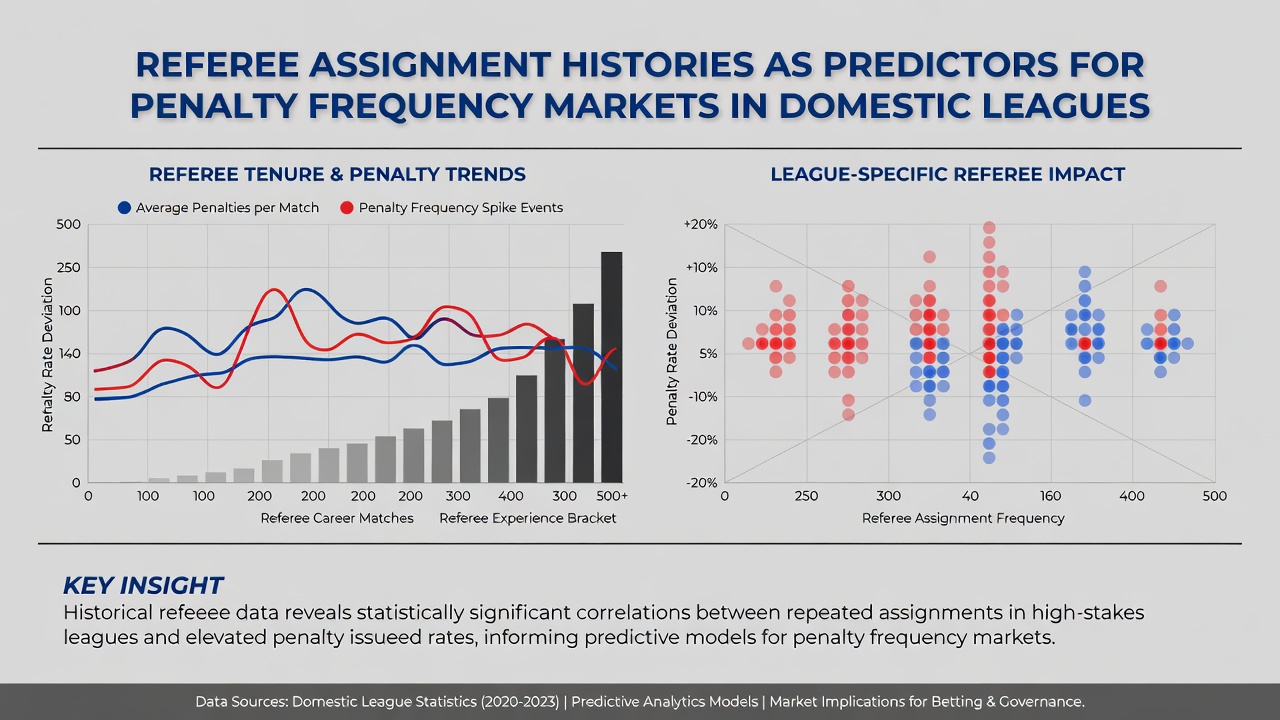
One approach involves building regression models that treat referee identity as a fixed effect, and these models have demonstrated improved accuracy when they account for assignment frequency and recent form. Figures from the German Bundesliga, for instance, illustrate that referees who average more than 0.35 penalties per game over five seasons continue to do so when assigned to matches involving teams that concede high volumes of shots inside the box.
Data Sources and Geographic Variations
Domestic leagues outside Europe also generate comparable datasets, although the volume of available matches differs. North American professional soccer competitions publish referee statistics through their central league offices, and these records allow similar modeling techniques to be applied. Analysts compare these figures against those from South American and Asian leagues to identify whether cultural or rule-interpretation differences influence penalty rates beyond individual referee tendencies.
According to research published by the Sports Science Institute, referee assignment stability correlates with more predictable penalty distributions, while frequent rotation introduces greater variance. The same study examined data from multiple confederations and found that leagues maintaining consistent assignment panels produce clearer signals for market participants who rely on historical patterns.
Challenges in Applying Historical Data
Referee performance can shift due to rule changes, fitness standards, or video assistant referee protocols, so models must incorporate recent adjustments rather than relying solely on long-term averages. Domestic leagues have introduced additional training modules on penalty-area decision-making in recent years, and these interventions appear in updated statistics that analysts monitor closely. Assignment histories therefore require ongoing updates to remain effective predictors, especially when leagues alter their referee evaluation criteria.
Teams that track these metrics internally often share anonymized findings through industry conferences, which helps standardize approaches across different markets. The result is a growing body of comparative data that covers multiple seasons and allows for more robust validation of predictive models.
Conclusion
Referee assignment histories serve as structured inputs that improve estimates of penalty frequency in domestic league markets when combined with team and situational data. Leagues that maintain transparent appointment systems and detailed decision logs supply the raw material for these analyses, while researchers continue to refine techniques that account for evolving officiating standards. As of October 2026, the availability of granular referee statistics across several continents supports ongoing development of models that translate historical patterns into market-relevant projections.